

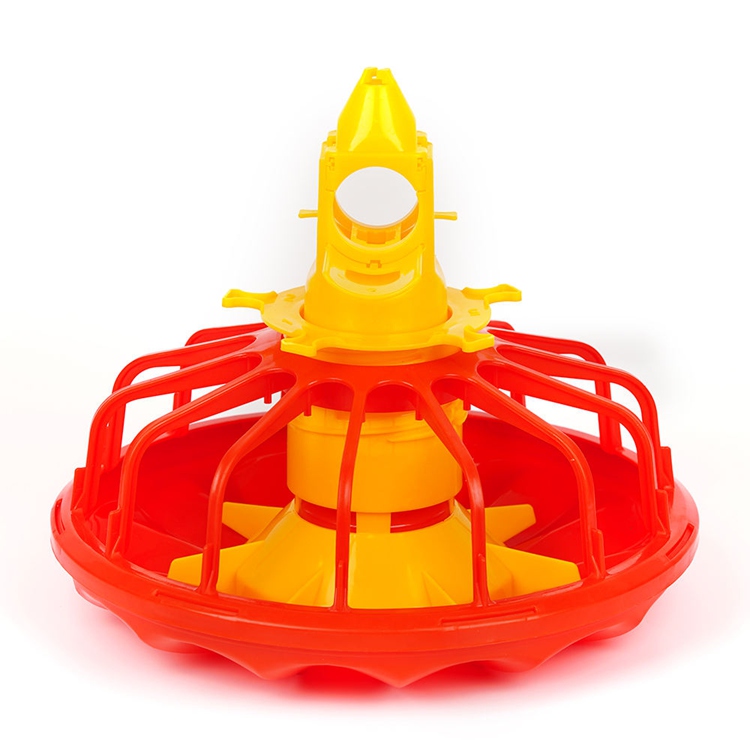
Automatic Broiler Pan Feeding System
+86 13784166699
+86 15064269689
Product Overview
The Automatic Broiler Pan Feeding System represents a significant advancement in modern poultry farming technology, designed specifically to optimize the growth and health of broiler chickens. This system automates the feed delivery process, ensuring a consistent supply of fresh feed is always available to the birds, which is critical for maximizing feed conversion ratios and achieving target weights efficiently. The system typically consists of a central feed line that transports feed to individual feeding pans distributed throughout the poultry house. The design of the pan itself is crucial; it features a wide, shallow basin that allows multiple birds to eat simultaneously without competition, and often includes features to prevent feed spillage and contamination.
Constructed from high-quality, durable plastics, the system is built to withstand the demanding environment of a commercial broiler house. The materials are resistant to corrosion from cleaning agents and the acidic nature of feed, ensuring a long service life. The bright colors, typically red and yellow, are not just for aesthetics; they are chosen to attract the birds' attention and stimulate feeding behavior. This automated approach significantly reduces the labor required for manual feeding, freeing up farm workers to focus on other critical management tasks such as monitoring bird health and maintaining environmental controls.
Key Features
Automated Feed Delivery: The core function of this system is automation. Feed is delivered from a central silo or hopper through a network of augers or chains to each individual pan. This ensures a continuous and uniform supply of feed, eliminating the peaks and troughs associated with manual feeding.
Optimized Pan Design: The feeding pan is engineered for efficiency. Its wide diameter allows a large number of birds to access feed at once, reducing stress and competition. The internal design often includes a central cone or grill that helps to distribute feed evenly and prevents birds from scratching feed out of the pan.
Height Adjustment Mechanism: A critical feature for broiler growth is the ability to adjust the height of the feeding pans. As the chicks grow, the feeders can be raised to ensure the rim of the pan is always at the correct height relative to the birds' backs. This promotes good posture and prevents feed waste.
Feed Level Control: The system includes a mechanism to control the amount of feed in each pan. This can be adjusted to ensure that feed is always available but not so much that it becomes stale or contaminated. Proper feed level management is key to maintaining feed quality and encouraging consistent consumption.
Benefits for Poultry Farmers
Implementing an Automatic Broiler Pan Feeding System offers numerous benefits that directly impact the profitability and sustainability of a poultry operation.
Improved Feed Efficiency: By providing constant access to fresh feed and minimizing waste through spillage and contamination, the system helps to improve the feed conversion ratio (FCR). A better FCR means less feed is required to produce a kilogram of meat, directly reducing one of the largest operational costs.
Labor Savings: Automation drastically reduces the time and manpower needed for daily feeding. This allows farm staff to dedicate more time to monitoring animal welfare, managing the environment, and performing maintenance, leading to a more efficient overall operation.
Enhanced Bird Health and Uniformity: Consistent access to feed reduces competition and stress among the flock. This leads to more uniform growth, where birds reach market weight at a similar time, simplifying the harvesting process. Furthermore, the hygienic design of the system helps to prevent the spread of disease through contaminated feed.
Scalability: These systems are highly scalable and can be installed in poultry houses of various sizes, from small-scale operations to large, industrial facilities. The modular design allows for easy expansion if the farm decides to increase its capacity.
Technical Considerations
When selecting an Automatic Broiler Pan Feeding System, several technical aspects should be considered to ensure it meets the specific needs of the farm.
Feed Line Capacity: The capacity of the auger or chain system must be sufficient to deliver feed to all pans in a timely manner. This depends on the length of the poultry house and the number of feeding lines installed.
Pan Capacity and Size: The size of the individual pans should be appropriate for the age and size of the broilers. A larger pan may be suitable for older birds, while a smaller pan might be better for chicks to prevent them from being overwhelmed.
Power Requirements: The system requires a reliable power source to operate the motors that drive the feed lines. It is important to ensure that the farm's electrical infrastructure can support the system's power demands.
Ease of Cleaning and Maintenance: Regular cleaning is essential to prevent the buildup of old feed and bacteria. The system should be designed for easy disassembly and cleaning. Additionally, components like augers and motors should be easily accessible for routine maintenance.
Conclusion
The Automatic Broiler Pan Feeding System is an indispensable tool for any modern poultry farmer looking to improve efficiency, animal welfare, and profitability. By automating the feeding process, it addresses many of the challenges associated with manual feeding, such as labor intensity, feed waste, and inconsistent feed availability. The system's robust design and thoughtful features make it a reliable and long-lasting investment that can significantly contribute to the success of a broiler production operation. As the poultry industry continues to evolve, the adoption of such automated technologies will be key to meeting the growing global demand for poultry meat in a sustainable and efficient manner.