

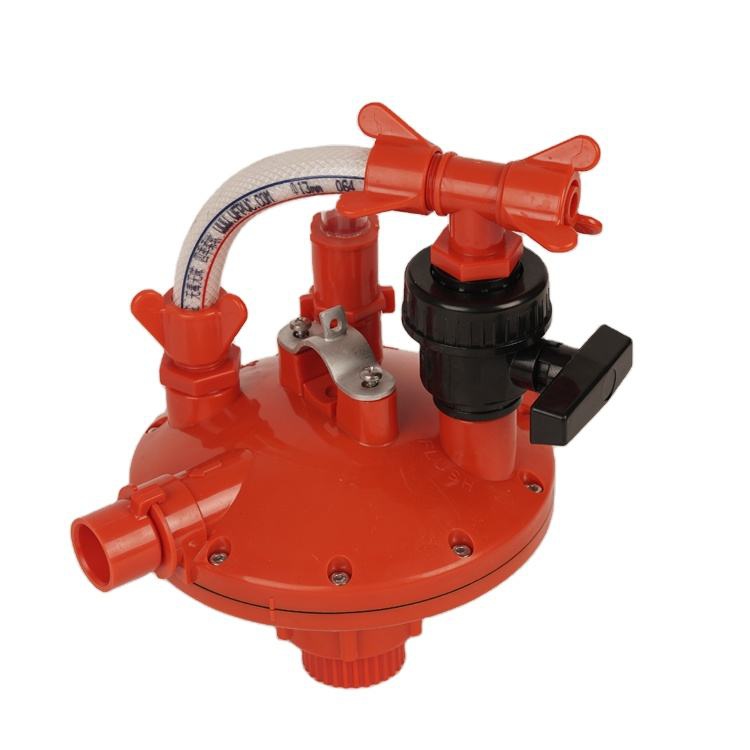
Automatic Poultry Water Pressure Regulator
+86 13784166699
+86 15064269689
Product Overview
The Automatic Poultry Water Pressure Regulator is a critical component in modern, automated poultry farming operations, specifically designed to manage and stabilize water pressure within drinking systems. This device ensures that water is delivered to poultry nipple drinkers, cups, or bell drinkers at a consistent and optimal pressure, regardless of fluctuations in the main water supply line. By maintaining a steady, low pressure, it prevents leaks, drips, and overflow that can lead to wet litter—a major contributor to ammonia production, poor air quality, and increased incidence of footpad dermatitis and other health issues in the flock. Constructed from robust, corrosion-resistant materials like high-grade ABS plastic and stainless steel, this regulator is built to withstand the harsh, humid, and chemically aggressive environment of a commercial poultry house. Its design prioritizes reliability, ease of adjustment, and long-term durability, making it an indispensable tool for any farmer committed to efficient water management, flock health, and operational excellence.
Key Features
Precise Pressure Control: The primary function of this device is to reduce high incoming water pressure from the main supply to a safe, low, and constant pressure suitable for poultry drinkers. This precise control is vital for the proper functioning of sensitive nipple drinkers, which require a specific activation force. Too much pressure can cause nipples to leak continuously, while too little pressure can prevent them from activating, leaving birds without water.
Stable Output: It features an internal diaphragm and spring mechanism that automatically compensates for variations in the inlet pressure. Whether the main supply pressure increases or decreases, the regulator adjusts internally to maintain a steady, pre-set outlet pressure, ensuring all birds across the entire house have equal access to water.
Durable Construction: The main body is typically made from high-impact, UV-stabilized engineering plastics like ABS or polycarbonate, which are resistant to cracking, corrosion from cleaning agents, and the general wear and tear of a farm environment. Internal seals and diaphragms are made from high-quality rubber or silicone to ensure a long, leak-free service life.
Integrated Filter: Many models, like the one depicted, include a built-in sediment filter at the inlet. This filter traps sand, rust, and other particulate matter from the water supply before it can enter and clog the delicate mechanisms of the regulator or the downstream drinking nipples, ensuring the entire system remains clean and functional.
Easy-to-Use Adjustment: The unit is equipped with an external adjustment knob or screw (the black component in the image). This allows farmers to easily and accurately set the desired output pressure without needing special tools. The adjustment is intuitive, enabling fine-tuning based on the age of the birds, as younger chicks require lower pressure than mature broilers or layers.
Flushing and Maintenance Valve: A key feature visible in the image is the T-handle valve. This is a flushing or bypass valve that allows the user to temporarily increase the water pressure to a high level. This high-pressure flush is essential for cleaning the water lines, removing biofilm, sediment, and medication residue that can accumulate over time, thus maintaining a hygienic drinking system.
Visual Pressure Indicator: The transparent tube connected to the side acts as a sight glass or manometer. It provides a clear, visual indication of the water level and pressure within the system. A stable water column in the tube confirms that the regulator is functioning correctly and holding the set pressure, allowing for quick visual checks without needing gauges.
Applications
Broiler Production: In fast-growing broiler operations, consistent water intake is directly linked to feed consumption and growth rates. This regulator ensures that water is always available at the right pressure, supporting maximum growth potential and feed conversion efficiency throughout the short production cycle.
Layer Farms: For laying hens, consistent water supply is crucial for maintaining egg production levels and eggshell quality. Dehydration or inconsistent water access can lead to a significant drop in lay rate. This regulator provides the stability needed for high-performing layer flocks.
Breeder Farms: In breeder operations, precise control over water and feed is often necessary for managing body weight and reproductive performance. The reliable pressure control offered by this device is fundamental to implementing such precise management strategies.
Pullet Rearing: During the rearing phase of young hens (pullets), it is critical to establish good drinking habits and ensure uniform growth. A properly regulated water system ensures that all birds, including smaller or less dominant ones, can easily access water, promoting flock uniformity.
Benefits
Improved Litter Quality: By preventing water spillage from over-pressurized drinkers, the regulator helps keep the litter dry. Dry litter is essential for good footpad health, reduced ammonia levels, and better overall air quality in the poultry house, leading to improved bird welfare and reduced respiratory problems.
Water Conservation: An efficient pressure regulation system drastically reduces water waste from leaks and overflow. This not only lowers water bills but also reduces the workload on manure management systems, as less water means drier manure that is easier to handle and has a higher value as fertilizer.
Enhanced Flock Health and Uniformity: When every bird has equal and easy access to clean water, it promotes uniform growth and development across the flock. It also reduces stress and competition at the drinker lines, leading to a calmer, healthier flock with a stronger immune system.
Reduced Labor and Maintenance: Automated, reliable pressure regulation minimizes the need for manual checks and adjustments. The integrated flushing valve simplifies the critical task of water line sanitation, saving time and labor while ensuring a consistently clean water supply.
System Longevity: By protecting downstream components like nipple drinkers from the damaging effects of high pressure and sediment, the regulator extends the operational life of the entire watering system, providing a strong return on investment by reducing replacement costs.