

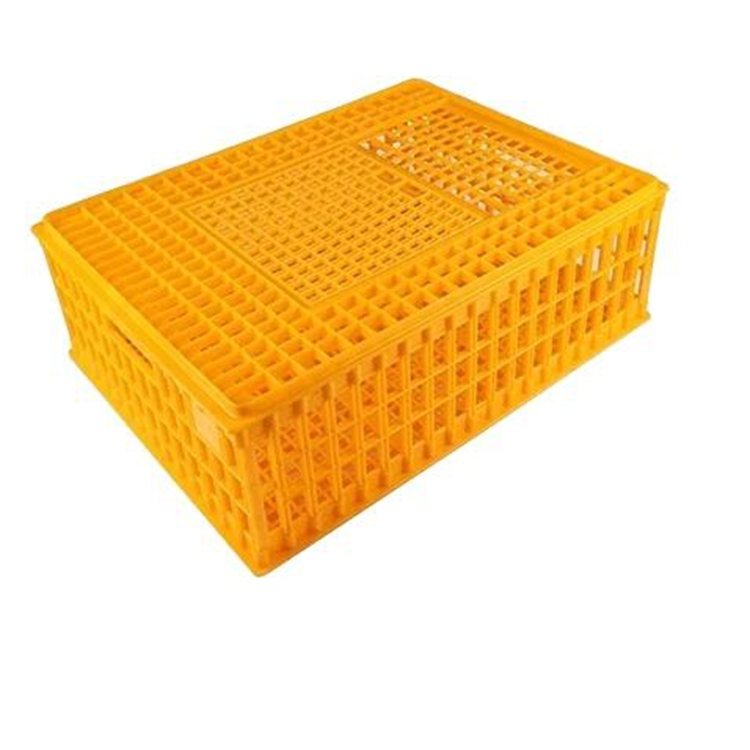
Heavy-Duty PP Plastic Chicken Transport Crate
+86 13784166699
+86 15064269689
Product Overview
The Heavy-Duty PP Plastic Chicken Transport Crate is a professional-grade poultry logistics solution designed to ensure the safe, efficient, and humane transportation of live birds. Engineered from 90% virgin polypropylene (PP) raw material, this crate offers superior structural integrity compared to recycled alternatives, providing the necessary strength to withstand the rigors of commercial farming and distribution. With standard external dimensions of 750mm x 550mm x 230mm, it strikes an optimal balance between capacity and manageability, allowing for high-density stacking while maintaining bird welfare. The distinct bright yellow color not only enhances visibility in busy loading docks and processing plants but also aids in inventory management and quality control. This crate is specifically designed to minimize stress and physical damage to poultry during transit, making it an essential asset for modern poultry farms, hatcheries, and processing facilities.
Advanced Material Engineering & Durability
The foundation of this transport crate's performance lies in its material composition. By utilizing high-quality, virgin polypropylene (PP), the crate achieves a level of toughness that is resistant to impact, cracking, and deformation. Unlike lower-grade plastics that become brittle over time, especially in freezing temperatures, this raw PP material maintains its flexibility and strength, ensuring the crate can survive repeated drops, throws, and heavy stacking loads without failing. Furthermore, the material is treated with UV stabilizers, making it highly resistant to degradation from sunlight exposure. This is critical for operations that involve outdoor storage or transportation in open-bed vehicles. The plastic is also impervious to water, oils, and common farm chemicals, meaning it will not rust like metal crates or rot like wooden alternatives. This chemical resistance ensures that the crate maintains its structural properties even after years of exposure to manure, feathers, and harsh cleaning agents.
Ergonomic & Ventilation Design
The structural design of the crate is meticulously crafted to prioritize the physiological needs of the livestock. The walls and lid feature a comprehensive grid-like lattice structure, composed of numerous square apertures. This design is not merely for weight reduction; it serves as a high-efficiency ventilation system. During transport, poultry generates significant body heat, and without adequate airflow, mortality rates due to heat stress can skyrocket. The grid pattern facilitates maximum air circulation from all sides—top, bottom, and lateral—ensuring a constant supply of fresh oxygen and the rapid removal of carbon dioxide and heat. The smooth, rounded corners of the grid prevent injury to the birds' wings, feet, and combs, a common issue with rougher materials like welded wire. Additionally, the crate features integrated handholds or grip points on the sides, allowing workers to lift and maneuver the heavy loads with greater ease and safety, reducing the risk of workplace injury.
Hygiene, Sanitation, and Biosecurity
In the modern poultry industry, biosecurity is paramount, and the design of this transport crate directly supports strict hygiene protocols. The smooth, non-porous surface of the polypropylene plastic prevents the accumulation of bacteria, pathogens, and organic matter in microscopic crevices. This makes the crate exceptionally easy to clean and sanitize. It is fully washable and can withstand high-pressure washing systems and steam cleaning without warping or absorbing water. This is a significant advantage over porous materials that can harbor salmonella or other pathogens. The open-grid design also allows for rapid drying after washing, preventing the growth of mold or mildew. By using these crates, poultry producers can significantly reduce the risk of cross-contamination between farms and processing plants, ensuring a safer food supply chain and compliance with rigorous health and safety regulations.
Logistics, Stackability, and Space Efficiency
Efficiency in logistics is a key selling point of the 75x55x23cm crate. The dimensions are standardized to fit perfectly on industry-standard pallets and into transport trucks, maximizing the use of cargo space. The top and bottom rims are designed with a "stack-and-nest" or interlocking capability. When loaded, the crates stack securely on top of one another, preventing slippage and toppling during transit, even on uneven roads. This stability is crucial for maintaining the welfare of the birds inside. Conversely, when the crates are empty and being returned to the farm, many designs allow for nesting (if applicable to the specific rim design) or compact stacking to minimize return freight costs. The lightweight nature of the plastic—despite its heavy-duty strength—means that more weight allowance is available for the cargo (the chickens) rather than the packaging, optimizing fuel efficiency during transportation. The bright yellow color also acts as a visual aid during loading and unloading, helping logistics teams work faster and with fewer accidents.
Versatility and Application Scope
While primarily marketed as a chicken transport crate, the versatility of this design extends to a wide range of poultry and small livestock applications. It is equally effective for transporting broilers, layers, breeders, ducks, geese, and turkeys. The robust construction also makes it suitable for use as a temporary holding pen or a quarantine cage on the farm. For smaller livestock, such as rabbits or guinea pigs, this crate provides a secure and visible housing solution. The 23cm height is generally suitable for standard broilers; however, for larger breeds or turkeys, the ventilation design remains effective, though capacity per crate would be adjusted. The crate's durability also allows it to be used in automated processing lines, where crates are mechanically tipped and washed, proving its resilience in industrial settings. Whether for a small family farm or a large-scale integrator, this crate offers a scalable solution for poultry handling.
Economic Advantages and Return on Investment
Investing in high-quality PP transport crates offers a compelling economic argument for poultry producers. While the initial upfront cost may be higher than disposable cardboard boxes or flimsy recycled plastic crates, the return on investment (ROI) is realized through longevity and reduced loss. These crates have a service life measured in years rather than months, withstanding thousands of trips. The reduction in "dead on arrival" (DOA) rates due to better ventilation and injury prevention directly impacts the bottom line. Furthermore, the elimination of disposal costs associated with cardboard or the frequent replacement of broken crates results in significant long-term savings. The ability to automate the washing and handling processes also reduces labor costs. In summary, the 75x55x23cm PP Plastic Chicken Transport Crate is not just a container; it is a strategic asset that enhances operational efficiency, ensures animal welfare, and protects the profitability of the poultry enterprise.